
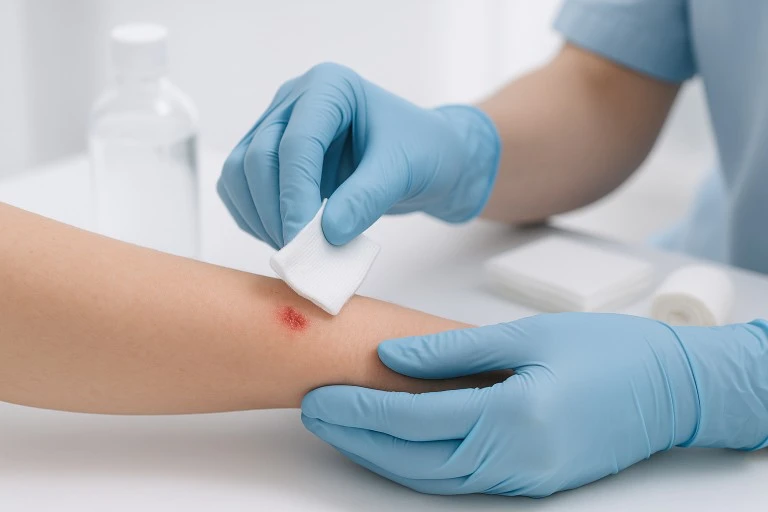
Proper wound cleaning is one of the most important steps in preventing infection and supporting the natural wound healing process. Even a small cut can become a deeper problem if dirt, bacteria, or debris remain inside the wound. At Vayu Advanced Wound Clinic and Hyperbarics, we see firsthand how early wound care affects recovery, especially for individuals with diabetes, circulation problems, or compromised immunity. A clean wound heals faster and carries a much lower risk of infection.
This guide explains not only how to clean a wound safely but also why each step matters and when professional care is needed.
Why Proper Wound Cleaning Matters
When the skin breaks, the protective barrier that keeps bacteria out is lost. Microorganisms from the environment, the skin surface, or the object that caused the injury can enter the wound. If these bacteria multiply, inflammation increases, and healing slows.
Key reasons wound cleaning is essential:
- It removes dirt, sweat, debris, or foreign material
- It reduces bacterial load on the skin surface
- It lowers the likelihood of infection
- It supports the natural healing phases of inflammation, tissue formation, and remodeling
- It helps medical providers assess the wound more accurately if care is needed
Incorrect cleaning methods, such as using hydrogen peroxide or alcohol directly inside an open wound, can harm healthy tissue. This slows wound closure and increases pain.
First Aid Wound Cleaning Essentials
Before cleaning a wound, gather simple first aid supplies so the process is safe and sanitary.
You will need:
- Clean gloves or hand sanitizer
- Saline solution or clean running water
- Mild soap (for skin around the wound only)
- Sterile gauze pads
- Clean cloth or sterile dressing
- Antibiotic ointment if advised
- Sterile adhesive bandage or wrap
These items help reduce contamination, protect healing tissues, and prevent further irritation.
How to Clean a Wound: Step-by-Step Guide
Follow these steps for safe wound care at home.
1. Wash your hands carefully
Use soap and water for at least 20 seconds or use an alcohol-based sanitizer if soap is not available. Clean hands prevent bacteria from entering the wound.
2. Stop any bleeding
Apply gentle pressure with clean gauze or a cloth. Most minor cuts stop bleeding within a few minutes. If bleeding continues for more than 10 minutes, seek medical attention.
3. Rinse the wound thoroughly
Use saline solution or clean running water. Rinsing removes dirt, loose debris, and surface bacteria. This step is more effective and safer than applying harsh chemicals.
4. Clean the surrounding skin
Wash the skin around the wound with mild soap and water. Avoid letting soap enter the wound because soap can irritate exposed tissues.
5. Avoid harsh solutions inside the wound
Do not use hydrogen peroxide or rubbing alcohol inside the wound. These substances destroy healthy cells that help healing.
6. Pat the wound dry with sterile gauze
Drying the wound reduces moisture that can trap bacteria.
7. Apply antibiotic ointment if recommended
A thin layer can help prevent infection in minor wounds. Avoid heavy application that can block airflow.
8. Cover with a clean bandage
A sterile, breathable dressing keeps the wound protected and lowers the risk of contamination. Change the bandage daily or whenever it becomes wet or dirty.
These steps support a healthy environment for tissue repair and help prevent complications.
How Wound Healing Works
Understanding how wounds heal helps explain why proper cleaning is so important.
Healing occurs in three main phases:
Inflammation phase
The body increases blood flow and sends immune cells to clean bacteria and damaged tissue.
Proliferation phase
New tissue forms, collagen builds strength, and the wound begins to contract.
Maturation phase
The new tissue becomes stronger and more organized.
Any disruption in these phases, such as infection or repeated trauma, slows healing and increases risk of complications.
Common Mistakes to Avoid When Cleaning a Wound
To protect healing tissue, avoid these common errors:
- Using alcohol or hydrogen peroxide directly in open wounds
- Skipping hand washing
- Reusing old or contaminated bandages
- Touching the wound with unclean hands
- Leaving the wound uncovered too soon
- Picking at scabs or disturbing healing tissue
Correcting these habits can significantly reduce infection risk.
Wound Cleaning at Home vs Professional Care
When wound cleaning at home is safe
Minor wounds such as scrapes, small cuts, or shallow injuries can usually be cared for at home if:
- Bleeding stops quickly
- Edges of the wound are close together
- There is no sign of infection
- The person has no underlying conditions that slow healing
When to seek professional care
Professional wound care is recommended if you notice:
- A deep wound or puncture
- A wound caused by a rusty or contaminated object
- A gaping wound that may need sutures
- Redness or swelling that spreads
- Pus or unusual purulent drainage
- Persistent pain or warmth
- Bleeding that does not stop after 10 minutes
- A wound that does not improve within a few days
At Vayu Advanced Wound Clinic and Hyperbarics, we evaluate wounds using advanced methods and create personalized treatment plans. Our approach may include specialized dressings, surgical debridement, hyperbaric oxygen therapy, or negative pressure wound therapy.
Why Some Wounds Need More Than Cleaning
Certain conditions make wounds harder to heal and require expert care.
Factors that slow healing:
- Diabetes
- Poor circulation
- Chronic swelling
- Pressure injuries
- Previous radiation therapy
- Immune system disorders
- Smoking
- Age related skin changes
These issues reduce blood flow, oxygen delivery, or immune response. When healing is slow, early intervention prevents complications and increases the chance of complete recovery.
Preventing Infection After Wound Cleaning
After cleaning, keep the wound protected and monitor it closely.
Recommended steps:
- Keep the wound covered during early healing
- Change bandages daily or when damp
- Avoid scratching or picking
- Keep the area dry
- Watch for redness, swelling, or drainage
- Seek medical help if symptoms worsen
Proper aftercare protects the wound and reduces the chance of infection.
Conclusion
Cleaning a wound correctly is one of the most important steps you can take to support healing. With the right supplies, careful technique, and close attention to signs of infection, many minor wounds heal successfully at home. When wounds are deep, slow to heal, or show concerning changes, professional care is the safest choice. Our team of wound care physicians and staff at Vayu Advanced Wound Clinic and Hyperbarics is here to help with advanced treatment options when needed.
FAQs
What is the best way to clean a wound?
Rinse with saline or clean running water, dry gently with sterile gauze, apply a thin layer of antibiotic ointment if advised, and cover with a clean bandage.
Should I use hydrogen peroxide to clean wounds?
No. Hydrogen peroxide can damage healthy tissue and delay healing.
How often should I clean a wound at home?
Clean small wounds once or twice a day or whenever the dressing becomes dirty.
When should I see a doctor for a wound?
Seek medical care if the wound is deep, does not stop bleeding, becomes red or swollen, or shows signs of infection.
Can I use saltwater to clean a wound?
Yes. Saline solution is gentle and helps remove debris without harming tissue.