Hook: Open with the problem millions of Americans live with wounds that simply refuse to heal, especially diabetic foot ulcers and venous leg ulcers. Mention that standard wound dressings often aren’t enough. Introduce PRP as a cutting-edge, natural regenerative therapy now being used at advanced wound care. Set up the rest of the blog as an educational guide for patients exploring their options.
What Is PRP (Platelet-Rich Plasma)?
- Explain that PRP is derived from the patient’s own blood making it 100% natural and autologous
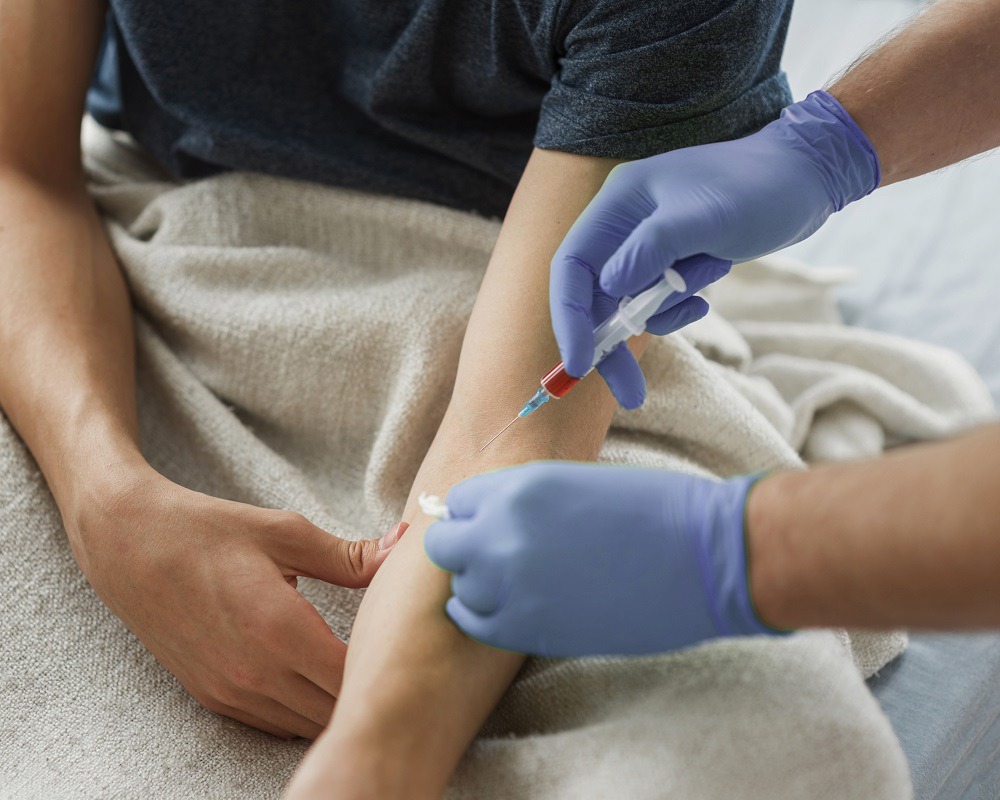
- Blood is drawn, spun in a centrifuge to concentrate platelets, then applied directly to the wound
- Platelets contain growth factors (PDGF, VEGF, TGF-β) that trigger the body’s natural repair cascade
- Briefly clarify PRP is not a drug or synthetic material it amplifies the body’s own healing signals
How Does PRP Promote Wound Healing?
Cover the 4 core mechanisms each as a short sub-point or brief paragraph:
- [H3] Stimulates Tissue Regeneration PRP jump-starts the healing cascade by providing a provisional fibrin matrix and a concentrated supply of growth factors that accelerate cell proliferation and collagen deposition+1
- [H3] Promotes New Blood Vessel Formation (Angiogenesis) New capillary growth restores circulation to oxygen-deprived wound beds, which is especially critical in diabetic and vascular wounds
- [H3] Controls Infection and Biofilm PRP has natural antimicrobial properties that help neutralize biofilm bacterial structures found in most chronic wounds that actively block healing
- [H3] Reduces Excessive Inflammation PRP modulates the inflammatory response that keeps chronic wounds “stuck” in the early healing phase instead of progressing to tissue repair
What Types of Wounds Can PRP Treat?
List wound types that respond well to PRP tie each to services offered at Vayu:
- Diabetic foot ulcers 87.5% of controlled studies found significant benefit for PRP in chronic diabetic wounds; PRP reduces infection, exudate, and amputation risk+1
- Venous leg ulcers Clinical trials show PRP improves complete wound closure vs. standard care with odds ratios of 2–8
- Chronic non-healing surgical wounds Including dehisced or post-operative wounds that fail to close
- Pressure injuries Studies report an odds ratio of 3.4 improvement in healing rates
What to Expect During PRP Treatment
Walk patients through the step-by-step procedure this section targets the “what to expect” search intent and builds trust:
- Blood Draw A small amount of blood is drawn from the patient’s arm (similar to a routine lab test)
- Centrifuge Processing Blood is spun in a centrifuge machine to separate and concentrate the platelets
- PRP Preparation The platelet-rich layer is extracted and activated for application
- Application to the Wound PRP is applied directly to the wound as a gel or injected into surrounding tissue, depending on wound type
- Dressing & Follow-Up Wound is dressed, and repeat sessions are typically scheduled 1–2 times per week
Healing Timeline sub-section:
- Weeks 1–2: Initial healing response begins, mild inflammation is normal
- Weeks 2–4: Wound size reduction begins; 56% of patients showed over 90% wound reduction as early as 4 weeks
- Weeks 4–12: Collagen remodeling and tissue strengthening
Is PRP Safe? Are There Any Side Effects?
- PRP is derived from the patient’s own blood extremely low risk of allergic reaction or rejection
- No complications related to PRP treatment were noted in multiple clinical studies
- Mild temporary soreness, swelling, or warmth at the treatment site is normal in Week 1
- Not recommended as a standalone therapy works best as part of a comprehensive wound care plan at a specialized clinic
Who Is a Good Candidate for PRP Wound Therapy?
Help patients self-identify this section directly feeds appointment bookings:
Patients who may benefit most:
- Those with diabetic foot ulcers that haven’t responded to standard wound dressings
- Patients with venous leg ulcers lasting more than 4–6 weeks
- Anyone with a chronic wound where standard care has stalled healing
- Patients looking for a natural, drug-free regenerative option
- Those at risk of amputation due to non-healing diabetic wounds
PRP Wound Therapy at Vayu Advanced Wound Clinic, San Antonio
- Mention Dr. Manjulatha Badam, MD, CWSP, UHM as the treating specialist
- Vayu offers PRP as part of a comprehensive wound care program that may also include HBOT, NPWT, and advanced debridement
- Clinic location: San Antonio, TX serving patients across the greater San Antonio area
- Include a direct CTA: “Ready to explore PRP for your wound? Book a consultation with Dr. Badam today.”
FAQs:
Q1. How many PRP sessions are needed for wound healing?
A: Most wound patients receive PRP applications 1–2 times per week, with visible results typically beginning within 2–4 weeks.
Q2. Is PRP covered by insurance for wound care?
A: Coverage varies by insurer and wound type. Patients should consult with the clinic for pre-authorization guidance.
Q3. Can PRP be used with other wound treatments?
A: Yes PRP works well in combination with HBOT, NPWT, and debridement as part of a multi-modal wound care plan.
Q4. How is PRP different from standard wound dressings?
A: Standard dressings create a healing environment, but PRP actively delivers growth factors that signal the body to regenerate new tissue at the cellular level.